
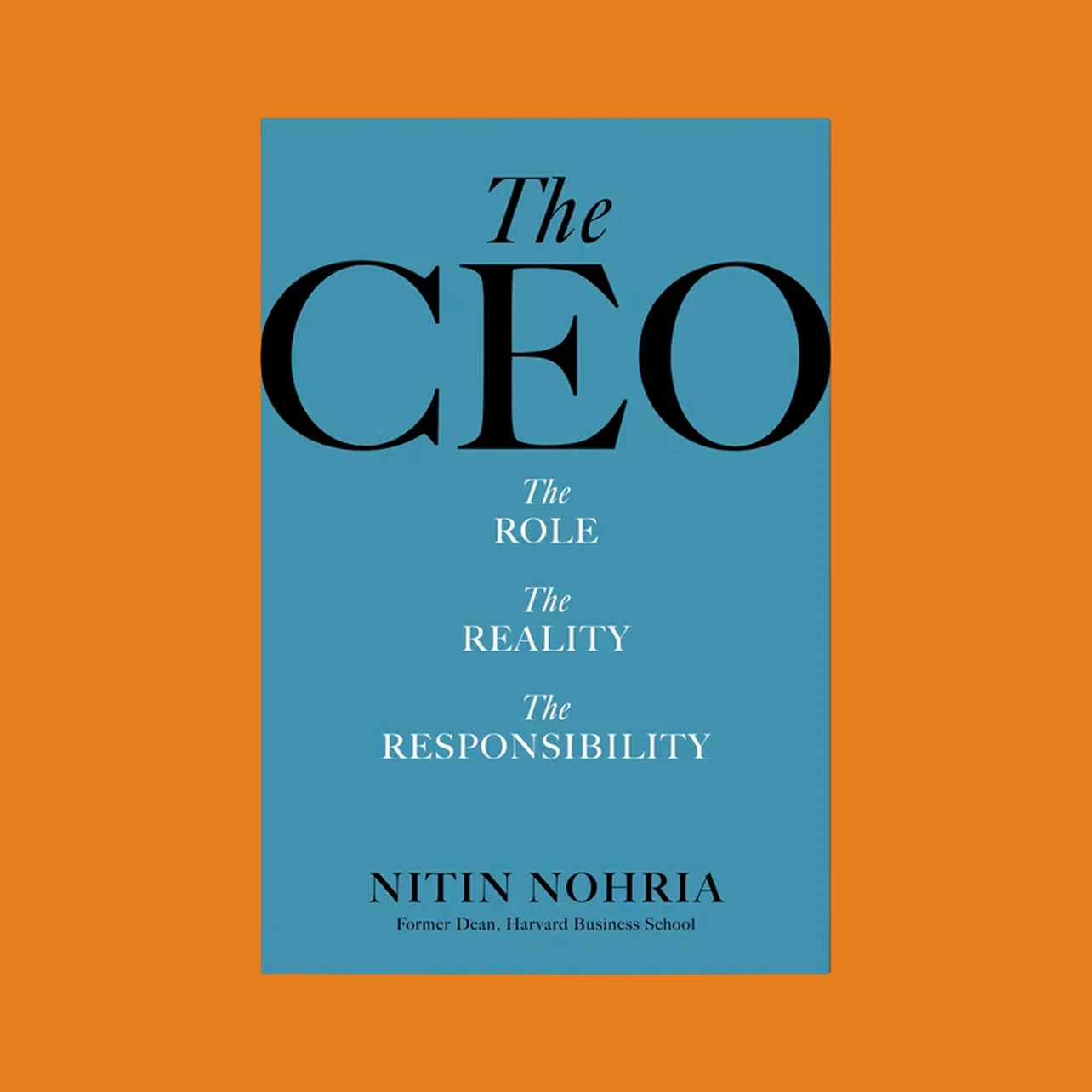
This is an excerpt from the book The CEO: The Role, the Reality, the Responsibility by Nitin Nohria. Harvard Business Review Press, September 2026.
One of the CEO’s critical responsibilities is to carve out a distinctive strategic position in every market in which the company operates.
CEOs must work with their leadership team members to clarify the company’s value proposition in each of its major business segments. A value proposition answers three questions. Which customers do we target? What specific customer needs do we fulfill? How much will we charge?
The answers to these questions help CEOs and their teams establish a competitive niche in the markets in which they compete.
The value proposition must align with the organization’s capabilities. That means the CEO must focus on one that is operationally and financially sustainable, compelling to customers, and consistently deliverable.
The CEO’s job is to steer the company toward a strategy that emphasizes its unique attributes and market positioning.
A well-crafted value proposition should differentiate the company from its competitors. If the answers to the questions above are not unique, the company can be drawn into a zero-sum game. Undifferentiated companies cede bargaining power to customers and end up with eroded margins when they feel forced to match their competitors’ moves. The CEO’s job is to steer the company toward a strategy that emphasizes its unique attributes and market positioning.
The value proposition should factor into the company’s economic model. For instance, a superior product, outstanding customer service, or brand prestige may support a premium pricing strategy. Conversely, a company offering a wide assortment of everyday products that are readily and conveniently available may pursue a low-cost strategy. The metrics used to run the company should reflect and reinforce key strategic choices.
A company that competes on innovation may adopt metrics such as the number of patents it’s able to register or the percentage of sales it derived from products introduced in the previous three years. Meanwhile, a company competing on everyday low pricing may measure things such as increasing inventory turns or reducing total logistics costs.
In one of our CEO workshops, a regional bank leader offered a vivid illustration of making a clear strategic choice. Her bank sat between the major money-center institutions and the smaller community banks, which served very different ends of the market. Rather than trying to compete with the majors for national clients—the accounts her bank had once viewed as its most prized wins—she made the courageous decision to cede that ground. She focused instead on mid-market clients that were too small to command attention from the majors yet too complex for the locals. She then aligned metrics around a different aspiration: how much of the total financial-services wallet the bank could capture from its chosen segment.
Once that strategic choice was clear, the CEO and her team became more adept at spotting white-space opportunities that were consistent with their strategy. Many mid-market clients were themselves trying to reach underserved groups but lacked strong banking partners in those communities. By structuring partnerships between her clients and local banks, she enabled both sides to grow in ways no competitor had imagined. What started as a disciplined strategic focus became a means of discovering new avenues for expansion.
Corporate strategy explains the economic logic that ties a company’s businesses together and makes the whole greater than the sum of its parts.
This sequence—clarifying a strategy, aligning metrics, and then looking for white space that serves both—captured the larger lesson this leader shared in our workshop: CEOs who are crystal clear about the strategic choices that define their companies are surprisingly adept at finding hidden opportunities that can reshape their competitive landscape.
Finally, the CEO must regularly review the value proposition and the overall strategic position to ensure that they remain relevant. As the market evolves, so, too, must the company’s strategy.
Strategy levels
In large organizations, strategy operates on three interlocking levels. Effective CEOs understand each level and how they work together, so the company’s overall strategy is simple to communicate and compelling to execute.
Business strategy—how each unit competes—is the most fundamental level, because it has the greatest impact on the company’s overall performance. The CEO’s primary job here is to work closely with the business heads to lock in distinctive strategies on where to play, how to win, and what capabilities must be better than those of rivals. Much as a chain breaks at its weakest link, a company’s strategy breaks at its weakest unit. As one CEO said, “It’s hard to win as a company when a business unit is chronically underperforming.” That’s why CEOs must define boundaries and decide when different product lines or customer segments require separate strategies rather than a one-size-fits-all plan.
Corporate strategy explains the economic logic that ties a company’s businesses together and makes the whole greater than the sum of its parts. The CEO must clarify which synergies cut across units—including shared technologies, customers, distribution, data, brands, and more-complete solutions—and should exclude those that are easy to rationalize but hard to realize. A useful question is: How does being part of our company give each business an advantage over being independent or owned by someone else? Beyond articulating and strengthening those advantages, the CEO dynamically reallocates resources across the portfolio by deciding where to invest more, which businesses to divest from, and which businesses to acquire. When the logic is fuzzy, investors notice. One diversified industrial company, for instance, faced activist pressure when its corporate strategy failed to provide a compelling logic for the synergies between its consumer and industrial divisions; outsiders argued for a breakup, and the firm underwent a painful restructuring to restore credibility.
Global strategy affects the many companies that operate across multiple countries and regions. CEOs must determine the degree of global integration versus local responsiveness across each element of the company’s value chain. They may, for example, choose global products and platforms but locally responsive marketing, pricing, partnerships, or service. A CEO should understand where scale or standardization creates advantage and where adaptation wins with customers or regulators.
One of a CEO’s hardest tasks is aligning and integrating these three levels so that units don’t pursue conflicting strategies. The test of strategic coherence is whether executives across the company can plainly state how their business wins, how belonging to the company makes them stronger, and where the enterprise is global versus local by design. When those answers line up, strategy sharpens execution, and performance follows.
Reprinted by permission of Harvard Business Review Press. Excerpted from The CEO: The Role, the Reality, the Responsibility by Nitin Nohria. Copyright 2026 Nitin Nohria. All rights reserved.