Interview Summary
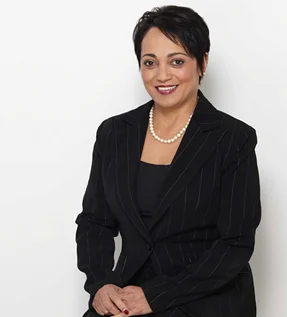
Shirley Zinn is Non-Executive Director of Sanlam and former Head of Human Resources for Standard Bank South Africa. Zinn’s interview focuses on her personal journey from a childhood of poverty in apartheid-era South Africa to her position as a prominent business leader. She discusses her upbringing in the Cape Flats, an area within Cape Town, which was established under the Group Areas Act (1950) to keep Black and Indian communities separate from White communities. Zinn describes receiving a government bursary to study education at the University of the Western Cape, where upon graduating she was required to teach for four years. Zinn went back to the Cape Flats where she took a position teaching English to high school students and adult learners. Zinn explains that she developed her own pedagogy involving participative and collaborative learning, which encouraged the students to return to class. From here, Zinn moved on to get her doctorate at the Harvard Graduate School of Education. In this interview, Zinn describes the challenges she faced in receiving permission from her job to take a temporary leave, and the tests she faced living in the alien culture of the United States.
After graduating in 1997, Zinn went back to South Africa seeking to work in education on curriculum design, but ultimately took a job at an insurance company designing training programs for entry-level staff. In 1998, Zinn moved to Pretoria briefly working in public service before becoming Head of Human Resources at the local affiliate of the British multinational Reckitt Benckiser in 2000. In this interview, Zinn describes the challenges that were presented to her as all of her credentials were in education, leaving her to learn about human resources on the job. After personal tragedy struck in 2003, Zinn left her role at Reckitt Benckiser and started Shirley Zinn Consulting. In 2004, Zinn became General Manager of Human Resources of the South African Revenue Services. The work was challenging as this organization was attempting to shift away from its apartheid-era culture, but Zinn believed that developing a system to collect taxes properly was essential in nation building.
In the interview, Zinn discusses her more recent involvement in board governance. Zinn argues that it is important to ensure that a sustainable economy is built in South Africa through well-run businesses that are profitable, but have compassion for people. Similarly important to her is having the ability to call out businesses when they are not behaving in such a manner. To conclude the interview, Zinn discusses her two high profile resignations as non-executive board member from Shoprite and Cricket South Africa that highlighted the issues of corruption in South Africa.
I believe that we have to live by the values of honesty, integrity, and dignity in all that we do.
Download Interview Transcript
Additional Resources
Interview Citation Format
Interview with Shirley Zinn, interviewed by John Macomber, Johannesburg, South Africa, February 28, 2020, Creating Emerging Markets Oral History Collection, Baker Library Special Collections, Harvard Business School.